Portable storage
Gear changes between outings
Ask aboutHow items are secured and reached
 MarineBrandsDIRECTORY / 01AU Australia
No matches. Try a brand, product type or “budget”.
Plan deck space, storage and equipment around a normal fishing day before buying accessories.
MarineBrands editorial · Reviewed 5 October 2026 · Buying analysis, not hands-on testing.
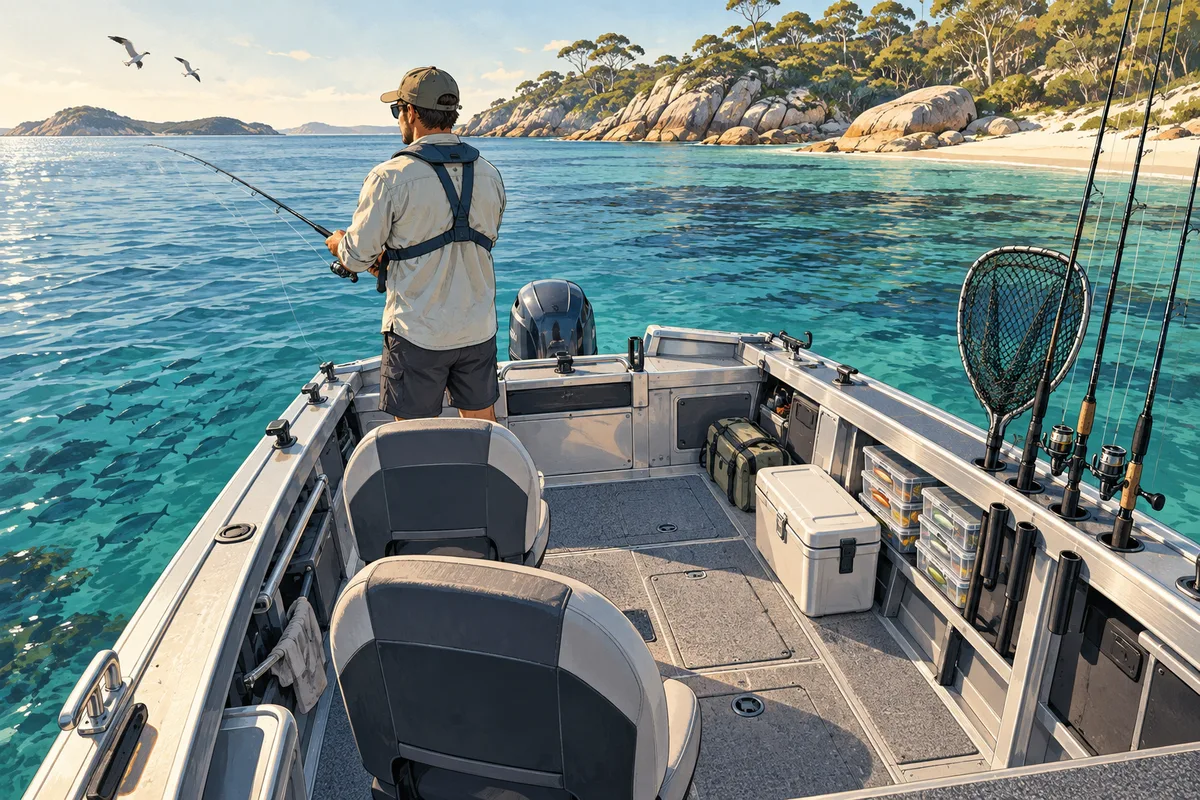
List launching, travelling, preparing tackle, fishing, landing a fish, packing up and retrieving the boat. Beside each step, record the items that must be within reach and the space a person needs to move. Start with the crew and the craft you actually have. A long accessory list can hide the practical issue: too many objects competing for the same small working area.
Make three lists: equipment permanently installed, equipment carried for every outing and items only needed for a particular method. Ask whether each permanent fitting earns its space. Discuss mounts and storage with the boat supplier or installer rather than assuming any flat surface is suitable. Keep access to existing boat systems and required equipment part of the layout conversation.
Prepare the handling equipment before the first cast. NSW fisheries guidance identifies poor handling as one factor affecting released-fish survival and recommends suitable landing equipment and minimising time out of water. Read the official guidance for your fishing method and species. From a buying perspective, compare where the net, measuring equipment and unhooking tools will be stored so they can be reached without unpacking the boat.
Use a written equipment list and a realistic walk-through with the boat stationary. Look for blocked access, duplicate storage and items that need to be moved repeatedly. Then ask the supplier to review any proposed modifications and the complete craft requirements. Keep receipts, model numbers and installation records together. A tidier layout should make the day easier; it does not replace a vessel, safety-equipment or conditions assessment.
Gear changes between outings
Ask aboutHow items are secured and reached
Equipment has a consistent daily role
Ask aboutInstallation approval and service access
There is a specific information gap
Ask aboutPower, mounting and complete system scope

Tick what you have gathered. Add your boat details and questions, then save a copy to take to a supplier.
Notes stay in this page and are not submitted. Download before leaving; this page does not save them.
Editorial comparisons explain questions to ask; manufacturer documents and the relevant authority govern the exact model, installation and activity.
First identify the practical gap in your current setup and review the craft requirements. Map a normal outing before deciding whether storage, handling equipment, installation work or electronics addresses that gap.
No. Separate occasional equipment from items used on every outing. Discuss safe storage and any proposed permanent modifications with an appropriate specialist.
Having suitable equipment ready helps avoid searching through lockers while handling a fish. Follow official guidance for the species and method, including catch-and-release advice where relevant.
Work through the equipment choices, installation questions and local research before spending.
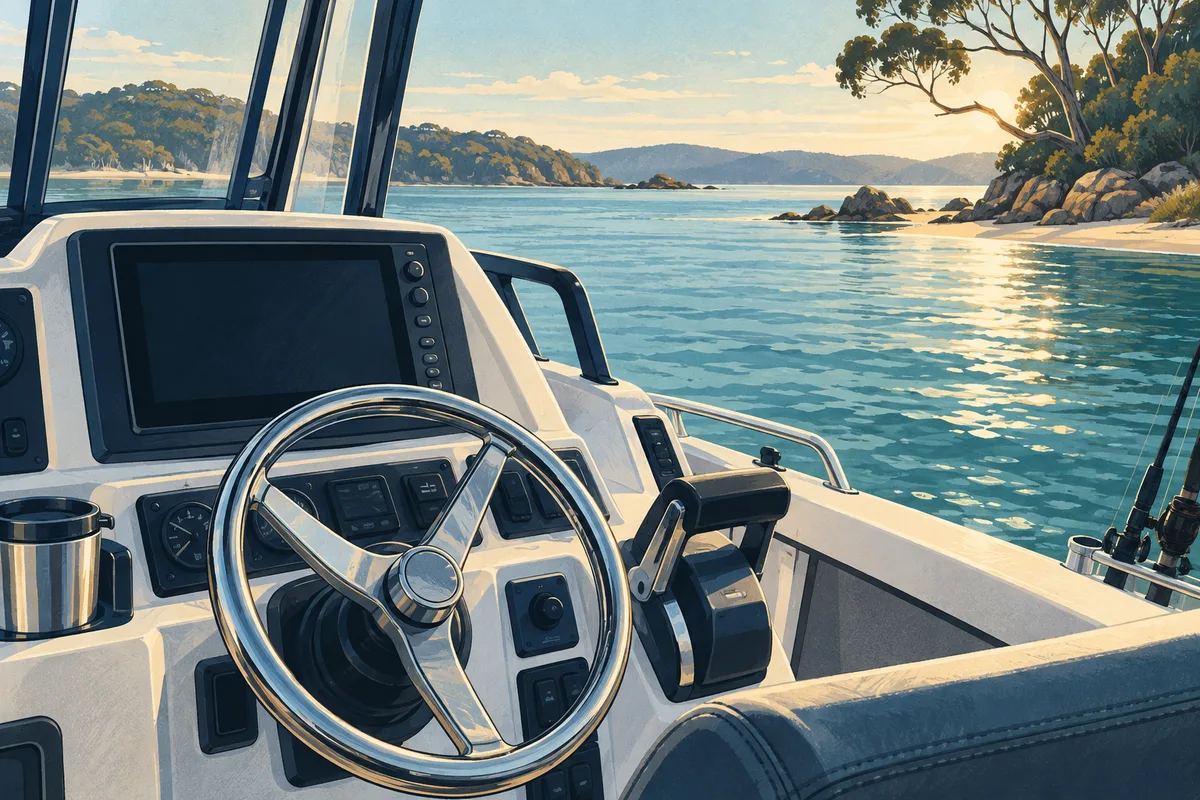
Compare the complete system, from the view you need to installation and Australian support.
Read the guide · Build your checklist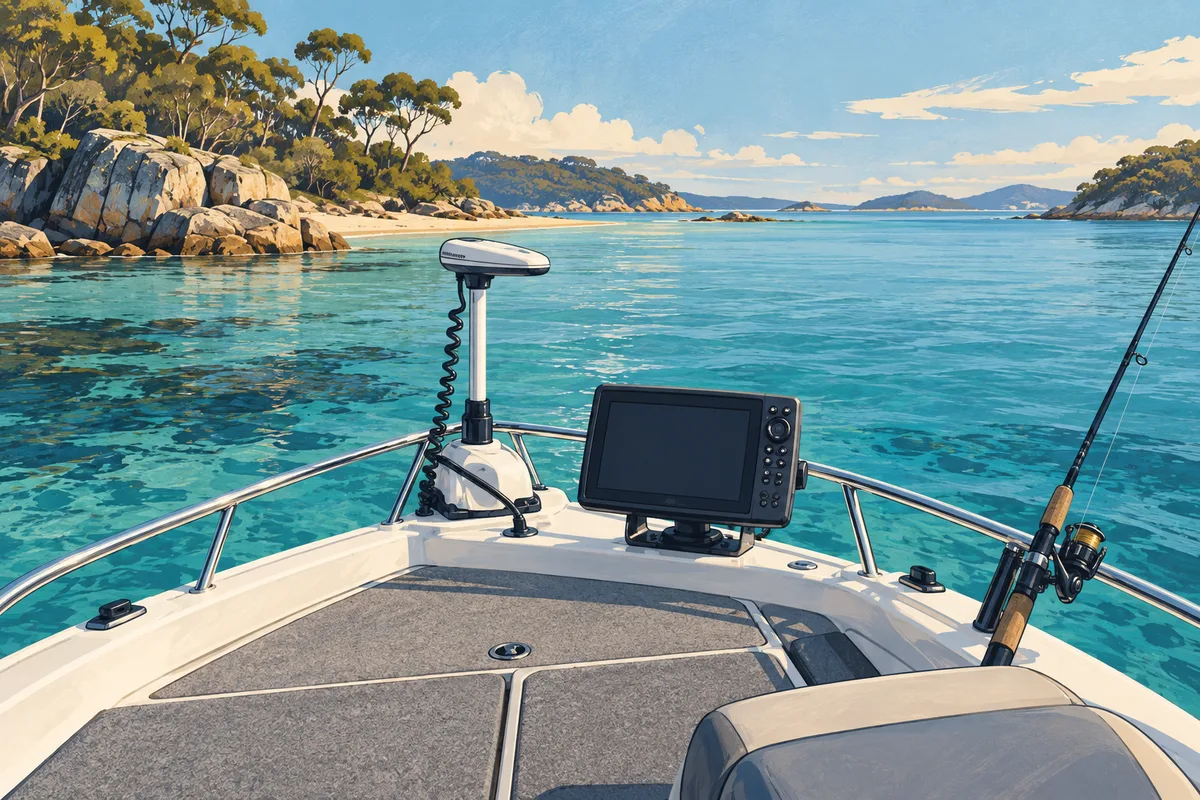
A practical buying framework for a complete live-sonar setup, its mounting and the time needed to learn it.
Read the guide · Build your checklist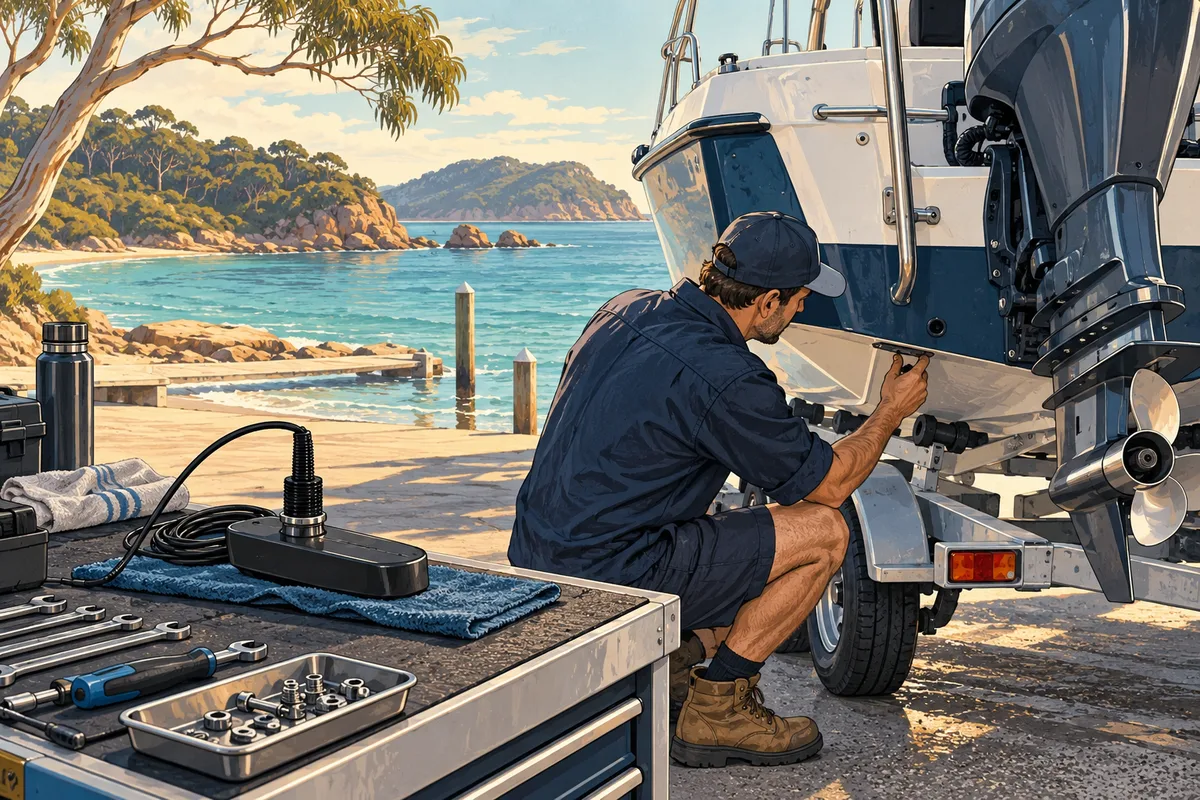
What to show an installer before committing to a fishfinder or transducer upgrade.
Read the guide · Build your checklist
Turn a broad destination idea into a documented set of local questions, without relying on old forum advice.
Read the guide · Build your checklistCard artwork is AI-generated editorial illustration.