Marine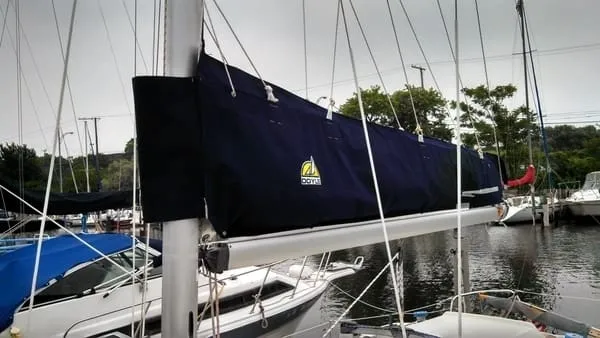
Treat these as complete sail-handling arrangements. Compare the rig, sail, controls and crew routine; adding a cover to an existing boom is a different project from changing the mast system.
Start with the boat and the crew
Identify whether you are choosing between boats already fitted with different systems or altering a boat you own. The first decision is about living with an existing arrangement. The second also involves the feasibility and cost of a rig change.
Describe who will hoist, reef and stow the sail, including reach and access difficulties. Ask for a supervised demonstration on the actual boat wherever possible. A system that sounds simple in a brochure can still need a routine that the crew must learn.
Understand what each system does
Doyle’s StackPack brings together a fully battened mainsail, lazyjacks and a cover that receives the lowered sail. Seldén’s furling mast arrangement stores the mainsail inside the mast. These are different ways to handle and stow a mainsail, with sail specifications tied to the particular rig.
Ask the sailmaker and rigger to describe the exact sail construction and hardware required. Do not assume a current conventional mainsail can be transferred to a furling mast, or that any cover and lazyjack kit will fit your existing boom and reefing system.
Price a change as a whole project
For a conventional arrangement, establish whether the proposal retains the sail, changes battens or sliders, adds a cover, or revises the reefing layout. Ask which parts of the existing setup are genuinely suitable for reuse. The loft may need to inspect them before confirming a price.
For a proposed in-mast conversion, obtain a rig-specific feasibility assessment before comparing equipment prices. Include the mast and sail implications, labour and commissioning. When buying a boat already equipped with furling, ask for service records and an assessment of the complete system instead.
Buy the operating routine as well as the hardware
Ask to see the ordinary hoisting or unfurling, reefing and stowing routine explained under appropriate supervision. Request the manufacturer’s instructions and discuss how maintenance and faults are handled by the local support network. Avoid turning an online comparison into an operating procedure.
An illustrative couple shopping for a cruising yacht could arrange demonstrations of both systems on shortlisted boats. Their decision should reflect the condition of each rig and how comfortably they can operate it, rather than assuming one arrangement is automatically right for all small crews.
Your planning checklist

Turn the lesson into a useful brief.
Tick what you have gathered. Add your boat details and questions, then save a copy to take to a supplier.
Notes stay in this page and are not submitted. Download before leaving; this page does not save them.
Buying questions, answered
Is a StackPack the same as in-mast furling?
No. A StackPack receives a lowered conventional mainsail at the boom; an in-mast system furls the sail into the mast.
Can I convert just by buying a different mainsail?
Do not assume so. Ask a rigger and sailmaker to assess the mast system and the sail specification together before ordering.
Sources & further reading
Original MarineBrands buying and planning guidance, informed by these manufacturer and official references. Confirm current specifications for the exact model and Australian version.
- Doyle Sails · StackPack sail-handling system ↗
- Seldén · conventional and furling mast systems ↗
- Doyle Sails · cruising mainsail options ↗
This is an editorial guide. Linked brand advertorials are identified separately; no paid sponsorship or manufacturer approval of this guide is claimed.