 Marine
Understand it.
Choose with purpose.
Follow propulsion from the engine to the propeller.
Map the components as a system
In a shaft-drive arrangement, the engine and transmission connect to a shaft and propeller through a boat-specific installation. Begin by recording what is fitted, including any accessible model or service information. Ask a marine professional to identify unknown components rather than inferring them from appearance.
The useful learning step is to see propulsion as a connected system. Replacing one component can require checks elsewhere, so a quote should explain the full scope and any retained equipment.
Turn symptoms into an assessment brief
If the concern is vibration, noise or performance, describe when it occurs and what changed before it began. Avoid diagnosing alignment or propeller suitability from an online discussion. Give the technician the observations and service history needed to investigate.
For a repower, ask which parts of the existing shaft arrangement can remain and what evidence supports that decision. Include access, yard requirements and any related work in the proposal.
Require a documented handover
Ask for a final equipment list and record of the installer’s checks. Keep the instructions and service information for the exact components, including those retained from the old installation.
Agree how you will report observations after the work. A clear baseline helps future servicing and separates normal questions about the new arrangement from an unresolved fault. The owner’s role is to preserve that information, not undertake alignment or structural work without the required expertise.
Compare the approaches
Use these differences to frame a conversation. This is a comparison of project approaches, not a ranking of brands.
| Approach | When to consider it | What to resolve |
|---|---|---|
| Inspection of existing drive | A symptom or service concern | Describe conditions and history accurately. |
| Retained shaft with repower | A machinery change using some existing parts | Require an assessment of retained components. |
| Wider drive renewal | A project involving several propulsion components | Coordinate yard work and commissioning. |
Vibration after another refit
An owner is considering a new propeller because vibration appeared recently.
A considered approach
Record the timing and operating circumstances, then commission a professional assessment before ordering parts.
A clear history can be more useful than an early diagnosis.
Two mistakes worth avoiding
Replacing parts to test a guess
Seek a system assessment before committing to hardware.
Losing records of retained components
Keep old and new references in one installation file.
Know the terms
- Transmission
- The machinery linking engine output to the propulsion arrangement.
- Shaft line
- The connected shaft-drive arrangement in the vessel.

Turn the lesson into a useful brief.
Tick what you have gathered. Add your boat details and questions, then save a copy to take to a supplier.
Notes stay in this page and are not submitted. Download before leaving; this page does not save them.
Sources & further reading
Manufacturer and authority references for the concepts and product context discussed here. Examples and planning exercises are MarineBrands editorial; they do not imply brand endorsement or product testing.
- Nanni Australia · repowering projects and support ↗
- Nanni Australia · model-specific download centre ↗

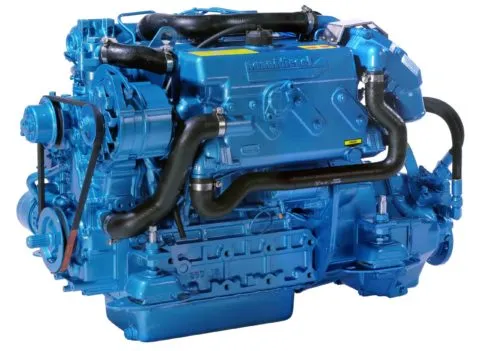
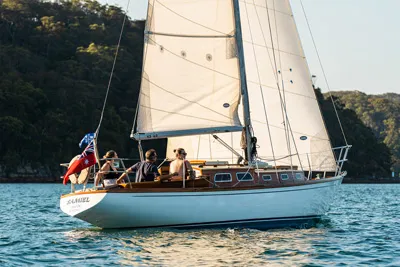
 Marine diesel engines →
 Saildrive systems →
 Marine generators →