 Marine
Understand it.
Choose with purpose.
Treat the radio, installation and operator as one communication system.
Define where communication must be accessible
Describe the places from which the crew needs to use the radio and the intended boating area. A fixed installation and a handheld have different practical roles, and some owners choose both. Compare access, audibility and the complete installation rather than choosing on handset appearance.
List the existing radio, antenna arrangement and any connected position equipment for the installer. Ask which accessories and integrations are needed for the exact proposed functions. Avoid transferring assumptions from another boat’s installation.
Learn the operating framework
ACMA publishes Australian marine radio procedures and qualification information. Use that official guidance and recognised training to understand operation. This buying tutorial is a planning aid, not a replacement for radio training or an emergency procedure card.
If you want digital calling features, ask the supplier which identity, position input and setup steps apply to the exact model. Keep equipment configuration and operator learning as separate items on the project list so neither is overlooked.
Include a proper handover
Ask the installer to explain the controls, supported connections, normal checks and official manual. A new radio should arrive with a clear record of what was installed and configured. Arrange appropriate familiarisation for other regular crew.
Consider how an occasional crewmate would find the radio and the relevant instructions. Accessibility and confidence are practical buying criteria. A premium device hidden in an inconvenient position may not provide the experience you expected.
Compare the approaches
Use these differences to frame a conversation. This is a comparison of project approaches, not a ranking of brands.
| Approach | When to consider it | What to resolve |
|---|---|---|
| Fixed radio | A permanent onboard communication position | Requires an appropriate installation and antenna arrangement. |
| Handheld radio | Portable access for a defined role | Consider charging, stowage and model limitations. |
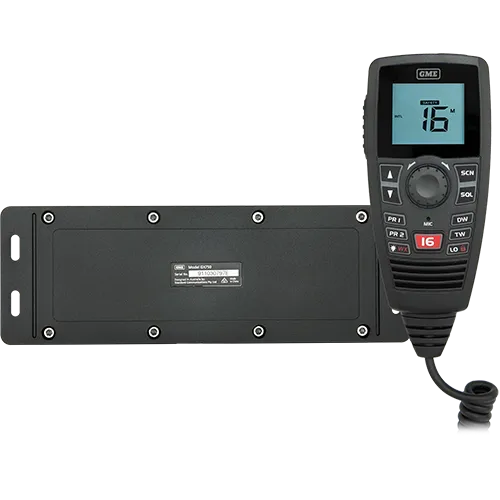
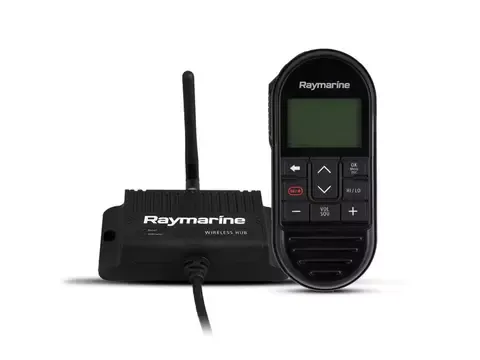
| Fixed radio with additional controls | More than one working position | Confirm accessory compatibility and included installation. |
A radio at the chart table
The skipper wants communication access while remaining at the helm.
A considered approach
Compare a supported additional control arrangement with other suitable options, including installation, audibility and crew training.
Begin with where the conversation happens, not just the radio catalogue.
Two mistakes worth avoiding
Treating purchase as training
Make operator qualifications and familiarisation part of the plan.
Ignoring the antenna installation
Ask the installer to assess the complete system before judging radio performance.
Know the terms
- VHF
- Very high frequency; the radio band used by marine VHF equipment.
- DSC
- Digital selective calling, where supported and correctly configured.

Turn the lesson into a useful brief.
Tick what you have gathered. Add your boat details and questions, then save a copy to take to a supplier.
Notes stay in this page and are not submitted. Download before leaving; this page does not save them.
Sources & further reading
Manufacturer and authority references for the concepts and product context discussed here. Examples and planning exercises are MarineBrands editorial; they do not imply brand endorsement or product testing.
- ACMA · marine radio operation and qualifications ↗
- Raymarine · model-specific manuals and installation documents ↗

 Instrument displays →
 Wind sensors →
 Sailing processors →
 Autopilots & controls →