 Marine
Understand it.
Choose with purpose.
Separate local alerting from satellite distress alerting.
Learn what the device actually transmits
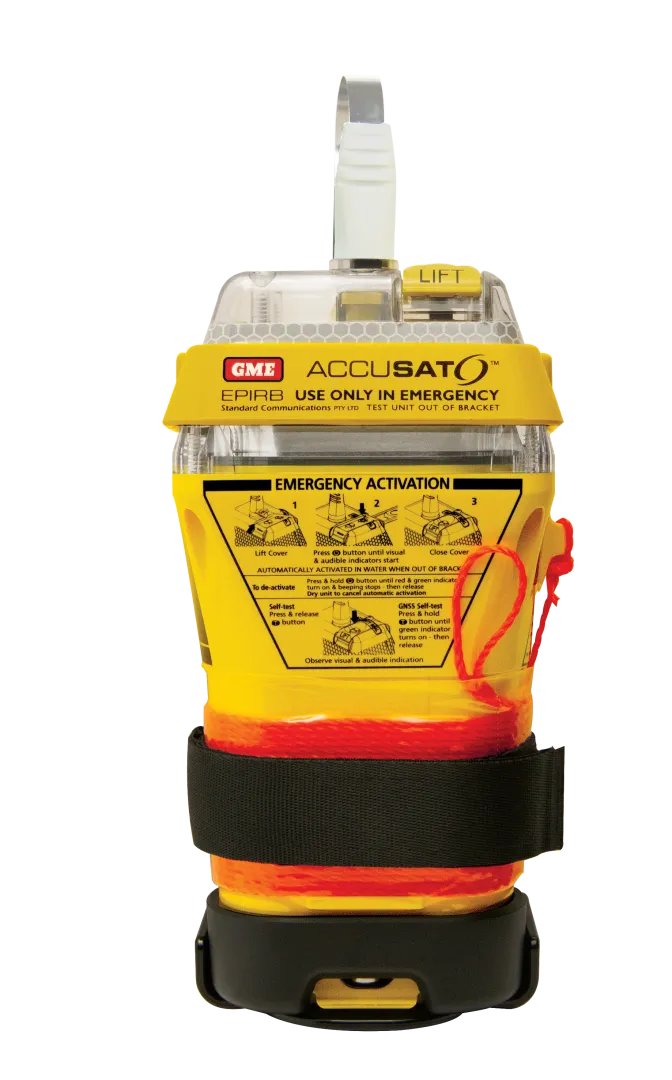
AIS-related personal alerting and satellite distress beacons are not interchangeable descriptions. Some products combine functions. AMSA explains that AIS-capable EPIRBs and PLBs can alert suitably equipped vessels within communication range while retaining their beacon function.
Ask the supplier to list the exact transmission functions of the proposed model. Avoid assuming that the letters AIS on a product mean every nearby boat will receive an alert or that the device includes a satellite beacon.
Consider the receiving boat
An alerting device belongs in a larger response plan. Ask an electronics specialist to confirm how the exact equipment is represented on your receiving installation, using approved test procedures. Record any software or compatibility requirements.
Keep this discussion separate from equipment claims based on a demonstration of another model. Your receiver, display and software are part of the question, and the crew needs appropriate familiarisation with the actual arrangement.
Plan wearing, fitting and familiarisation
Where a device is used with a lifejacket, have the approved combination and fitting method confirmed by the relevant supplier. Do not improvise modifications to personal protective equipment. Keep both sets of instructions together.
Use only approved self-test and training procedures. This tutorial helps define the buying and integration brief; emergency activation and response must follow the actual equipment guidance and appropriate training.
Compare the approaches
Use these differences to frame a conversation. This is a comparison of project approaches, not a ranking of brands.
| Approach | When to consider it | What to resolve |
|---|---|---|
| AIS personal alerting device | A defined local-alerting role | Confirm exact functions and receiving equipment. |
| Combined beacon and AIS device | A requirement for multiple supported functions | Understand each function separately. |
| Lifejacket-integrated arrangement | An approved wearable combination | Confirm fitting, servicing and model compatibility. |
A crew wants alerts on its plotter
The owner assumes a new wearable device will appear on the existing navigation screen.
A considered approach
Ask the supplier to verify the exact receiver, display and software combination and explain an approved verification process.
The receiving installation belongs in the purchase brief.
Two mistakes worth avoiding
Assuming AIS means satellite alerting
Check the exact model’s functions.
Fitting accessories without approval
Have the wearable combination confirmed and follow its instructions.
Know the terms
- AIS
- Automatic Identification System; supported distress devices use AIS for local alert information.
- Combined-function device
- A product with more than one specified alerting function.

Turn the lesson into a useful brief.
Tick what you have gathered. Add your boat details and questions, then save a copy to take to a supplier.
Notes stay in this page and are not submitted. Download before leaving; this page does not save them.
Sources & further reading
Manufacturer and authority references for the concepts and product context discussed here. Examples and planning exercises are MarineBrands editorial; they do not imply brand endorsement or product testing.
How we research and present information →

 Instrument displays →
 Wind sensors →
 Sailing processors →
 Autopilots & controls →