 Marine
Understand it.
Choose with purpose.
Make small adjustments clear, repeatable and easy to manage.
Identify the adjustment, not just the rope
Control lines let the crew adjust parts of the sail-handling system. Begin by naming the function and describing how it is used. A line adjusted constantly by one sailor has different practical priorities from a line set infrequently and left in place. Write the role on your equipment list.
Follow the arrangement on a diagram and identify the blocks, cleats and end attachments involved. Ask a rigger to assess inaccessible or loaded equipment. A complete route helps explain friction, handling and wear concerns.
Compare handling in the actual arrangement
Ask the supplier to explain how the proposed rope suits both the application and the holding hardware. Small diameter does not mean the system is unimportant. Feel, visibility and repeatability can matter to the crew as much as an advertised strength figure.
Bring photographs of the working position and describe the adjustment you struggle to make. This gives the supplier an operational problem to solve, rather than asking them to select a rope from colour and diameter alone.
Build a consistent crew language
Use a clear name and identification method for each control. Keep the line route and final specification in the boat’s records. If several controls are renewed together, consider how a new crew member will distinguish them.
Ask for care guidance and inspect recurring wear patterns with the supplier. A control system is successful when the crew can find, use and understand it without confusion, and when its hardware has been assessed for the role.
Compare the approaches
Use these differences to frame a conversation. This is a comparison of project approaches, not a ranking of brands.
| Approach | When to consider it | What to resolve |
|---|---|---|
| Frequently adjusted control | A working position used throughout a sail | Prioritise handling and clear identification. |
| Occasionally adjusted control | A setting changed less often | Check holding and service access. |
| Multi-part arrangement | A system with several blocks and attachments | Have the complete route assessed. |
Two similar ropes at the cockpit
New crew confuse two adjustments during manoeuvres.
A considered approach
Map and label their roles, then discuss identification and handling improvements with the rigger.
A rope project can improve communication as well as equipment.
Two mistakes worth avoiding
Ignoring the cleat
The rope and holding device must be considered together.
Changing several controls without records
Keep a simple diagram and naming system for the crew.
Know the terms
- Control line
- A rope used to make a particular adjustment.
- Purchase system
- An arrangement of line and blocks that changes the effort and travel involved.

Turn the lesson into a useful brief.
Tick what you have gathered. Add your boat details and questions, then save a copy to take to a supplier.
Notes stay in this page and are not submitted. Download before leaving; this page does not save them.
Sources & further reading
Manufacturer and authority references for the concepts and product context discussed here. Examples and planning exercises are MarineBrands editorial; they do not imply brand endorsement or product testing.
How we research and present information →
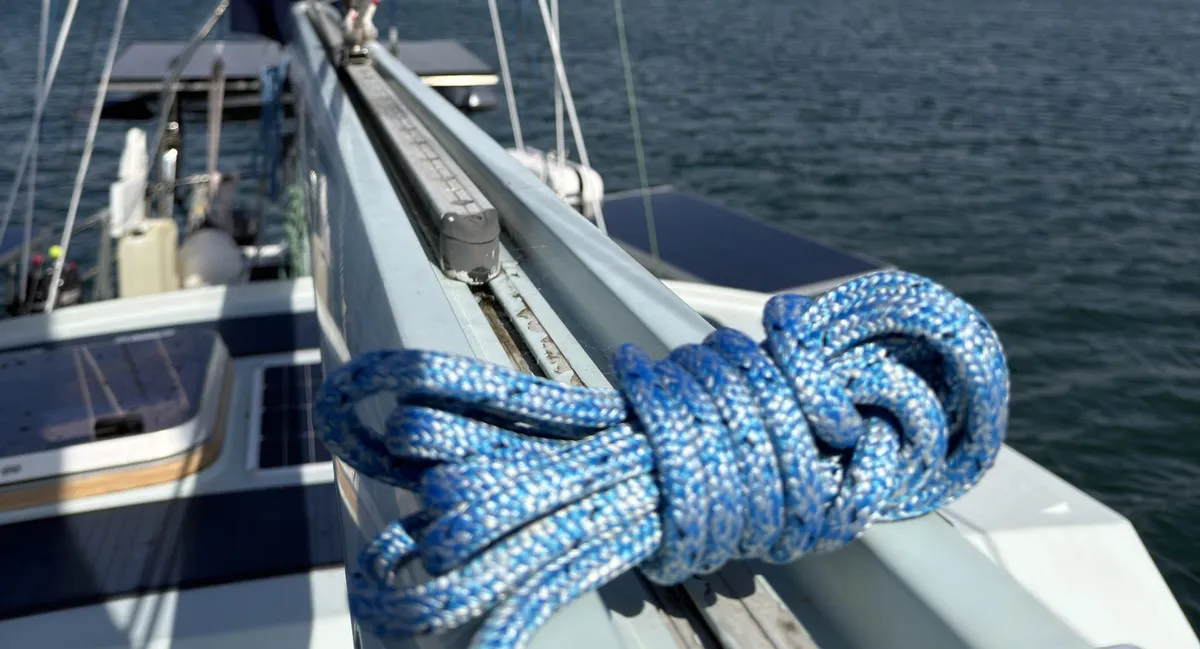
 Sheets →
 Halyards →
 Blocks & pulleys →
 Winches →