 Marine
Understand it.
Choose with purpose.
Compare the whole trimming station, from line entry to crew effort.
Look at the working position
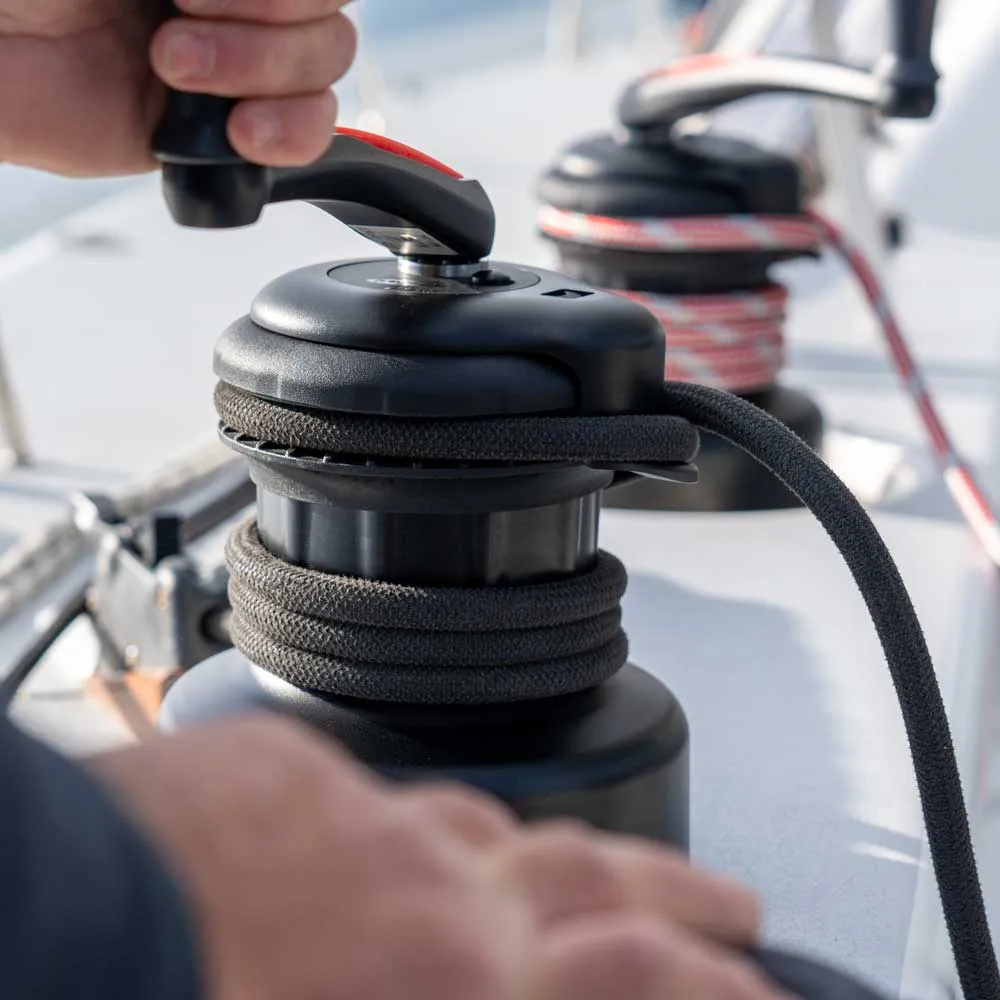
A winch changes how the crew handles a loaded line, but its usefulness depends on the surrounding station. Photograph line leads, nearby fittings and the space used by the handle and operator. Explain which tasks are difficult and which crew members do them.
That information helps a supplier discuss size, location and controls. An isolated winch specification cannot show whether the crew has room to work comfortably or whether supporting changes are needed.
Understand what the proposed model changes
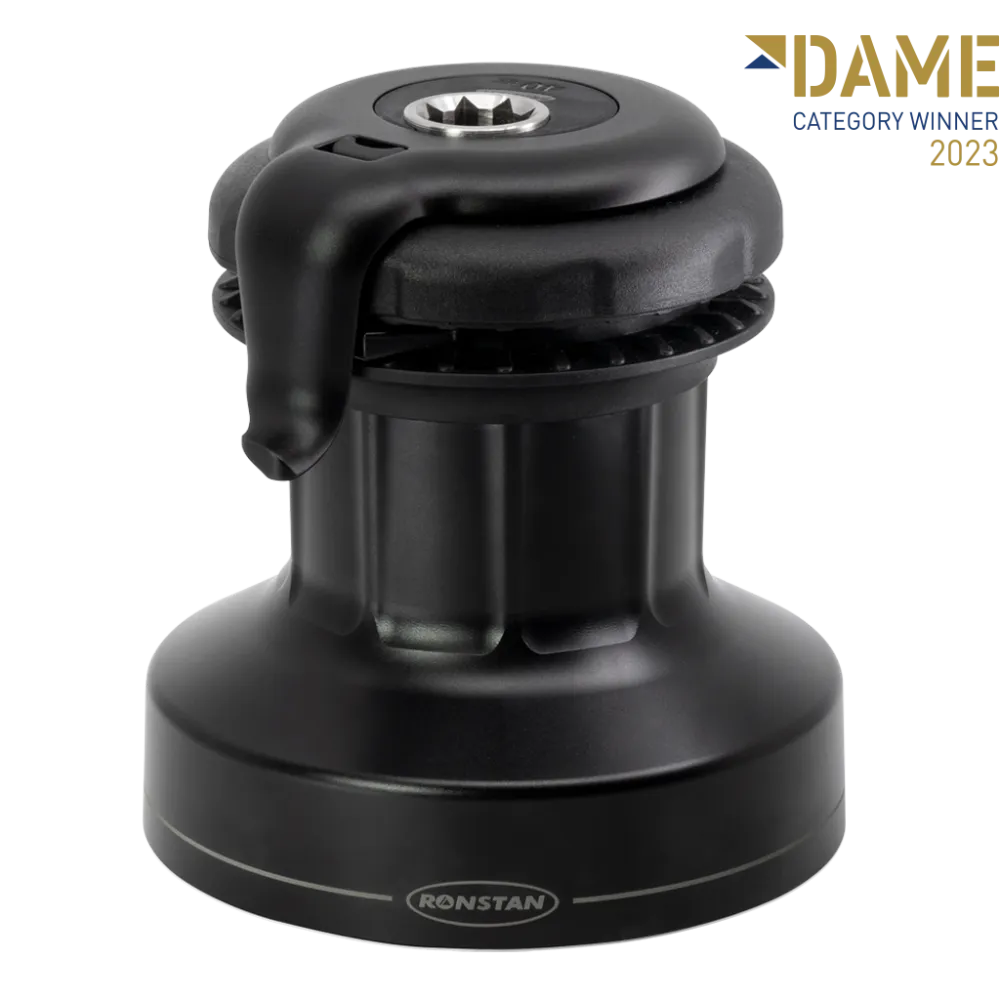
Ask the supplier to explain the operating features of the exact model and their relevance to your tasks. Ronstan’s range and manuals are useful references for its own equipment. Do not transfer the operating sequence of one winch to another by appearance.
Separate manual handling, supported assisted functions and any electrical installation in the proposal. If considering powered equipment, ask for the complete system assessment and crew instruction appropriate to it.
Specify fitting, familiarisation and servicing
A winch project should include assessment of the mounting and line arrangement, not simply the new unit. Ask who will fit it and demonstrate its intended operation. Keep the model-specific safety and service instructions accessible.
Record service access and the recommended maintenance route. A premium winch should be presented as a long-term working component, with the support and documentation needed to look after it.
Compare the approaches
Use these differences to frame a conversation. This is a comparison of project approaches, not a ranking of brands.
| Approach | When to consider it | What to resolve |
|---|---|---|
| Manual replacement | A supported station with a clear replacement need | Confirm mounting, line entry and handle clearance. |
| Ergonomic improvement | A crew struggling with the present station | Review the working arrangement, not only gearing. |
| Powered installation | A professionally assessed need for assistance | Include controls, electrical work and specific familiarisation. |
A handle clashes with the sprayhood
The owner assumes a more powerful winch is the solution.
A considered approach
Show the supplier the working position and ask for an assessment of clearance, location and suitable equipment.
Solve the station’s actual limitation before choosing the model.
Two mistakes worth avoiding
Reusing a hole pattern without assessment
Mounting compatibility must be confirmed, not assumed.
Skipping operating familiarisation
Different features require the exact manufacturer’s instructions.
Know the terms
- Self-tailing
- A winch feature that manages the line tail in its intended arrangement.
- Line lead
- The direction in which the rope approaches the winch.

Turn the lesson into a useful brief.
Tick what you have gathered. Add your boat details and questions, then save a copy to take to a supplier.
Notes stay in this page and are not submitted. Download before leaving; this page does not save them.
Sources & further reading
Manufacturer and authority references for the concepts and product context discussed here. Examples and planning exercises are MarineBrands editorial; they do not imply brand endorsement or product testing.
How we research and present information →
 Sheets →
 Halyards →
 Control lines →
 Blocks & pulleys →