 Marine
Understand it.
Choose with purpose.
Understand direction, friction and load before choosing deck hardware.
Read the complete line path
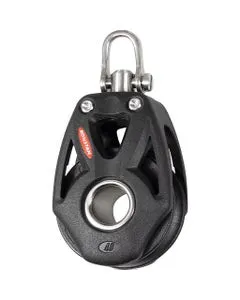
A block guides a line, and may be one component of a larger purchase arrangement. Draw the line path and identify its attachment points. The angle through a block and the way it is attached affect the assessment; a photograph of the block alone can leave out the most useful information.
Tell the supplier whether you are replacing a worn item or changing the arrangement. A redesign needs assessment of the whole system, including the structure supporting it.
Use the correct load language
Ronstan distinguishes maximum working load from breaking load. They are not interchangeable buying figures. Ask the supplier to explain which rating and configuration applies to your installation. Do not use the failure figure as a working target.
Compare rope compatibility, attachment, available space and intended application together. A compact block may look convenient but still need a different attachment or arrangement. Let the supplier identify the appropriate model rather than choosing by outside dimensions.
Finish with an installation and service plan
Ask who will assess the mounting and carry out any required changes. Keep the exact model and its instructions with the boat. At handover, confirm that the delivered arrangement matches the proposal.
If replacing a damaged block, record the damage and seek an explanation of its cause. A new component does not automatically resolve an unsuitable lead, attachment or underlying system problem.
Compare the approaches
Use these differences to frame a conversation. This is a comparison of project approaches, not a ranking of brands.
| Approach | When to consider it | What to resolve |
|---|---|---|
| Direct replacement | An assessed existing arrangement | Confirm exact rating and attachment compatibility. |
| Lower-friction project | A control that is difficult to work | Assess the full route before selecting bearings. |
| Purchase redesign | A changed handling requirement | Review loads, travel, attachment and structure together. |
A mainsheet block needs replacing
The owner finds a smaller model with an impressive breaking-load figure.
A considered approach
Ask the supplier to assess the line route, working-load requirement and attachment before selecting a replacement.
Compare the rating relevant to the application, not the largest number.
Two mistakes worth avoiding
Confusing working and breaking load
Read the manufacturer’s definitions and obtain an application assessment.
Ignoring the attachment
The block and supporting arrangement must be suitable together.
Know the terms
- Sheave
- The wheel that guides the rope.
- Working load
- The manufacturer’s specified working-load rating for the relevant product and configuration.

Turn the lesson into a useful brief.
Tick what you have gathered. Add your boat details and questions, then save a copy to take to a supplier.
Notes stay in this page and are not submitted. Download before leaving; this page does not save them.
Sources & further reading
Manufacturer and authority references for the concepts and product context discussed here. Examples and planning exercises are MarineBrands editorial; they do not imply brand endorsement or product testing.
How we research and present information →

 Sheets →
 Halyards →
 Control lines →
 Winches →