 Marine
Understand it.
Choose with purpose.
Understand the vessel beacon’s role before comparing features.
Distinguish vessel and personal equipment
AMSA distinguishes EPIRBs from personal locator beacons and notes that a PLB is not a substitute where an EPIRB is required. Begin by checking the requirements for your vessel and area with the relevant authority. Then compare appropriate equipment.
Separate that compliance check from optional feature preferences. An appealing feature list does not answer whether the exact model and arrangement satisfy the rules applying to your boat.
Compare the exact package and installation
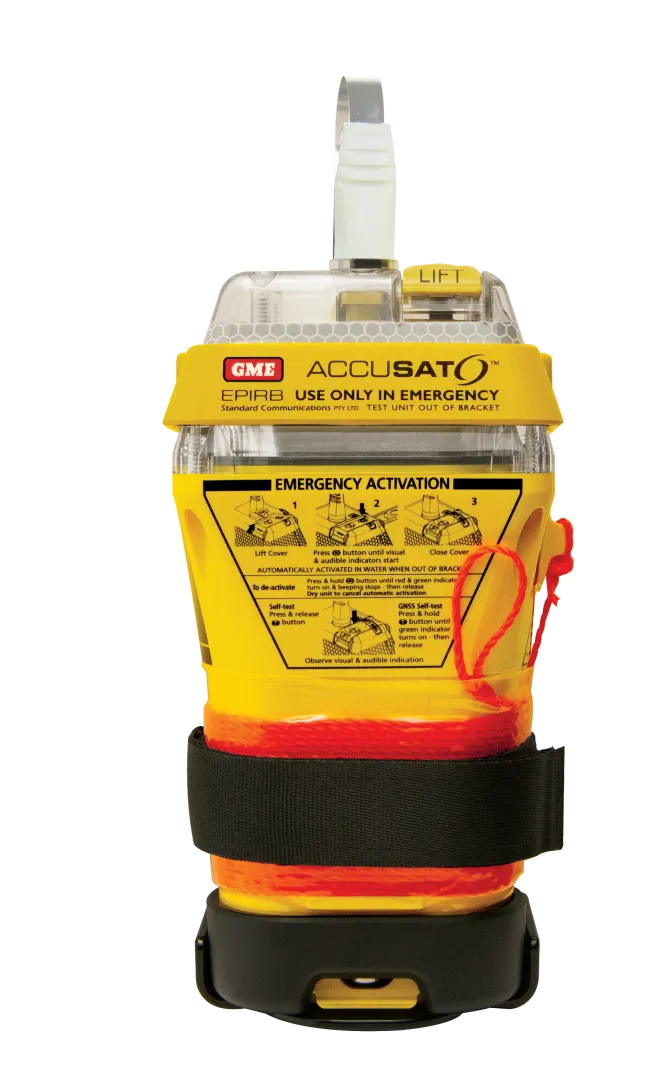
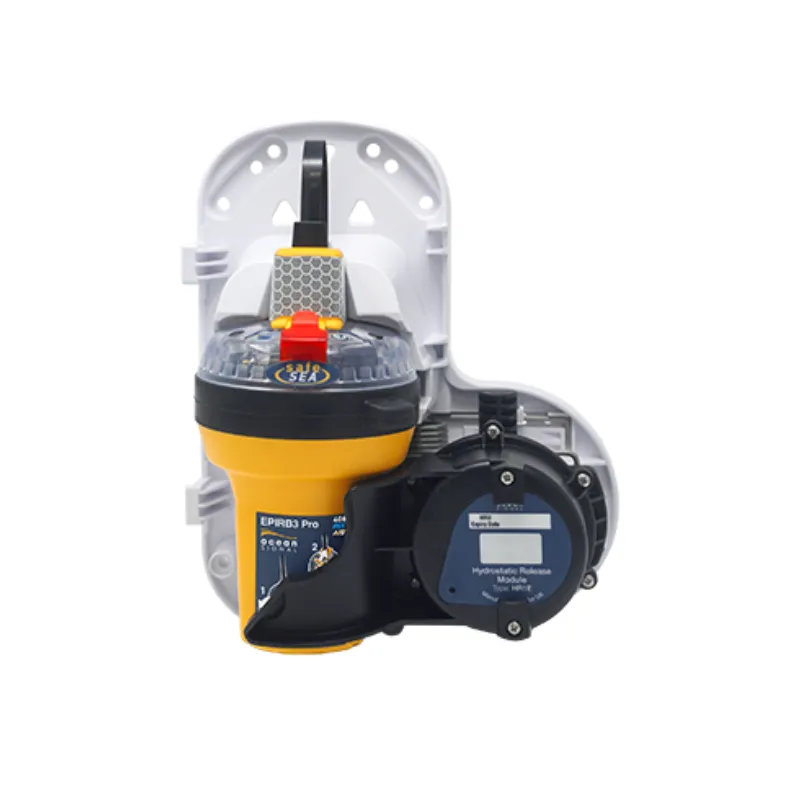
Ask the supplier to identify the Australian model, included mounting arrangement and manufacturer instructions. Consider access and crew familiarisation as part of the purchase. If discussing automatic or float-free arrangements, obtain advice for the exact equipment and vessel requirements.
Keep a clear distinction between the beacon itself and additional alerting features. Ask the supplier to explain what each feature does using the model documentation, without assuming every product in a family behaves the same way.
Maintain ownership and service records
AMSA provides beacon registration guidance. Build registration details, equipment identity and manufacturer service dates into the boat’s records. Review those records when ownership or contact information changes.
Use only the manufacturer’s approved self-test and service instructions. Do not activate a live distress alert as a practice exercise. Arrange familiarisation around the official instructions so the crew knows where the equipment is and how to find its guidance.
Compare the approaches
Use these differences to frame a conversation. This is a comparison of project approaches, not a ranking of brands.
| Approach | When to consider it | What to resolve |
|---|---|---|
| Vessel beacon replacement | An existing boat updating its equipment | Check current requirements and exact Australian model. |
| New installation | A vessel needing an appropriate beacon arrangement | Include mounting and crew access. |
| Feature-led upgrade | A compliant baseline with additional requirements | Understand each feature and its limits. |
A new owner inherits a beacon
The boat has a beacon but the owner does not know its registration or service history.
A considered approach
Identify the unit, check the records and official requirements, then seek supplier guidance on its condition and service needs.
Treat the records as part of the safety equipment.
Two mistakes worth avoiding
Assuming a personal beacon replaces a vessel requirement
Check the applicable authority’s rules.
Practising with live activation
Use only the approved self-test and familiarisation guidance.
Know the terms
- EPIRB
- Emergency Position Indicating Radio Beacon.
- Registration
- The official record associating beacon identity with owner and contact details.

Turn the lesson into a useful brief.
Tick what you have gathered. Add your boat details and questions, then save a copy to take to a supplier.
Notes stay in this page and are not submitted. Download before leaving; this page does not save them.
Sources & further reading
Manufacturer and authority references for the concepts and product context discussed here. Examples and planning exercises are MarineBrands editorial; they do not imply brand endorsement or product testing.
How we research and present information →

 Instrument displays →
 Wind sensors →
 Sailing processors →
 Autopilots & controls →